Pig Standing in Field Redwork Embroidery Design Review
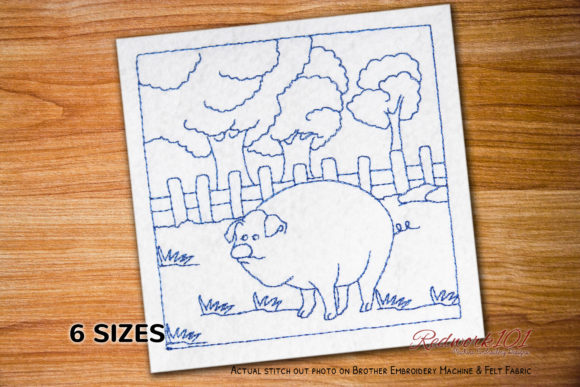
As an embroidery designer specializing in merchandise for small businesses, I encounter countless designs. The moment I saw Pig Standing in Field Redwork, I was struck by its inherent character. This isn’t a generic graphic; it’s a distinct scene with a specific mood. For a creative business, the name and implied aesthetic suggest a friendly, rustic, and handmade personality. This design feels grounded, approachable, and carries a touch of pastoral charm. It leans more towards classic and decorative than modern or minimalist, which is a powerful asset for businesses wanting to convey warmth and authenticity.
Business Applications for Your Branded Merchandise
This embroidery design offers a versatile foundation for a wide range of branded items. Its clear focal point—the central pig figure—makes it highly effective for recognition, even at smaller sizes.
For uniform accents, consider using Pig Standing in Field Redwork as a chest logo on staff aprons, particularly for a farm-to-table café, a rustic bakery, or a countryside boutique. Its friendly vibe softens the professional look of a uniform, making staff feel more approachable. On a simple work shirt sleeve or cap front, it serves as a subtle but memorable brand mark without overwhelming the garment.
The design excels as a standalone embroidered patch. This opens immense possibilities. A handmade shop or Etsy seller could create iron-on patches for customer gifts or event merch. A local florist or pet brand could use it as a product label add-on, sewn onto tote bags or apron pockets. As a patch, it allows for flexible application across different fabrics and products without needing to embroider each item directly.
Evaluating Visual Impact on Brand Identity
How does Pig Standing in Field Redwork affect your business’s perceived identity? Using this design signals a brand that values charm and craftsmanship over slick corporate polish. It builds customer trust through its familiar, wholesome imagery. On premium merchandise like high-quality tote bags or artisan aprons, it elevates the product value, suggesting it’s not just a logo but a piece of art. For visual consistency, ensure the thread colors you choose align with your existing brand palette. The redwork style offers a cohesive, limited-color scheme that can simplify this integration and strengthen your handmade presentation, directly engaging buyers who appreciate craft details.
Practical Considerations for Commercial Embroidery
Successfully deploying this digital embroidery file for commercial projects requires some practical tests. My first recommendation is always to stitch it out in a single, contrasting color—often black or white—on your intended fabric. This reveals the true structure of the machine embroidery design, letting you assess the outline integrity and spacing without color distractions.
Test the design at the small patch size you intend to use, especially for cap fronts or product packaging accents. Check if the pig's form remains distinct and if any fine details become lost. Pay close attention to thread color contrast against your final fabric, particularly on dark uniforms or textured materials like canvas tote bags. The optional outer box stitch mentioned in the description is a key consideration. Since its color often differs, decide if this border is part of your brand vision or if you'll skip it for a cleaner, integrated look.
Navigating Potential Production Challenges
Certain applications require careful planning. On highly curved surfaces like some cap fronts, ensure the design’s density and size are suitable to avoid puckering. For items destined for frequent washing, such as staff uniforms, verify that the stitch density is appropriate for the fabric to maintain durability. Always use the proper stabilizer for your chosen material—this is non-negotiable for a clean finished product. Before bulk production, create a physical mockup for client approval. This is crucial. Stitch the design on a scrap of the actual fabric and sew or apply it to a sample garment. Seeing it in context alongside your other design assets confirms its scale and impact.
Final Designer Notes Before You Proceed
Integrating Pig Standing in Field Redwork into your small business merch strategy can be highly effective. Its Wild Animals category theme connects with businesses rooted in nature, community, or simple pleasures.
To ensure a smooth process, I advise confirming the practical specs not detailed here. Check the specific hoop size required and the exact stitch count to gauge production time. Most importantly, verify the commercial licensing terms of the embroidery file before using it on products for sale. This protects your business.
When you test on real fabric, simulate the final environment. How does it look on the curved pocket of an apron? How does it feel on the brim of a cap? Compare it in different contexts: as a subtle sleeve detail versus a bold tote bag mark. This design has a strong, standalone personality. Used thoughtfully, it can become a beloved visual asset for your brand, transforming custom apparel and handmade products into cohesive, professional, and engaging branded merchandise.