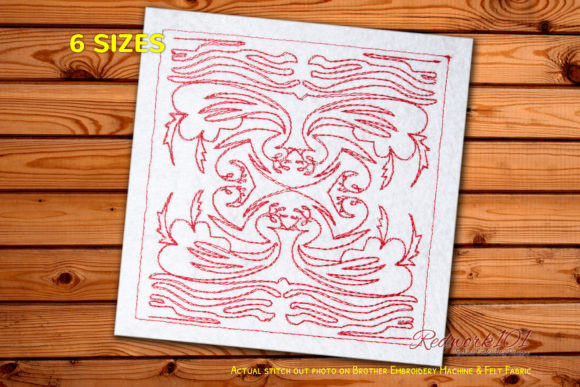
Bird Quilt Lineart: A Design Review for Real Projects
When you open a new embroidery design, you’re looking for more than just a nice picture. You’re looking for a tool—something that will translate beautifully into thread, add value to a product, and resonate with a customer. That’s the lens I’m using to look at the Bird Quilt Lineart design. As someone who stitches for clients, my small shop, and as gifts, the first question is always: “Where does this belong?”
The Quiet Charm of Line Art Embroidery
The Bird Quilt Lineart design immediately strikes a mood of calm, classic craftsmanship. It’s not loud or overly decorative. The clean, continuous lines suggest a redwork or outline stitch approach, which creates a gentle, hand-drawn feel. This isn’t a design that shouts; it whispers. That visual personality makes it perfect for projects where subtlety and taste are key—think personalized gifts, boutique home decor, or heirloom-quality baby items like quilt blocks or pillow covers. It feels timeless.
The “quilt” aspect in the title suggests a patchwork or modular layout, which is incredibly versatile. You could easily envision this as a central motif on a kitchen towel, repeated on a blanket border, or isolated as a single bird motif for a cap or a small patch. The level of detail seems deliberate, avoiding overly dense areas that can become problematic on thinner fabrics. For makers, this means it likely won’t require excessive stitch density, which is a relief for projects on stretchy or lightweight materials.
Where This Design Finds Its Home
Let’s talk real life. Imagine you’re preparing a custom embroidered tote bag for a client who loves nature themes. This Bird Quilt Lineart design would be a strong contender. Its intricate cuts and line-based form would stitch out with clarity, creating a sophisticated, artisanal look that elevates a simple bag into a handmade product with real character. On a crisp white or natural linen sweatshirt, it would achieve that modern, minimalist aesthetic that sells so well in online shops.
For small business owners, especially Etsy sellers crafting nursery decor, this design is a quiet gem. Stitched onto a organic cotton baby bib or the corner of a receiving blanket, it becomes a gentle, gender-neutral motif perfect for personalized gifts. The lineart style avoids the cartoonish feel of some children’s designs, leaning more towards something a parent would appreciate for its artistry. As a printable mockup or in a digital product preview, it communicates a clean, professional asset.
In commercial embroidery, for say, a series of aprons for a boutique cafe, this design offers brand consistency without being generic. It’s recognizable yet not overwhelming. The optional box stitch mentioned in the description is a practical note—it gives you a framing element if you need it, but allows the core bird and quilt motif to stand alone. This flexibility is valuable when adapting a design for different products, from a large pillow cover to a small tea towel.
Practical Considerations for Stitching Success
A design’s beauty on screen is one thing; its performance in the hoop is another. The “Intricate Cuts” categorization hints at detail. This means for successful embroidery, you need to be mindful. On highly textured fabrics like some towels or thick sweaters, fine lines can get lost. On dark fabric, thread color contrast is paramount—you’d want a bright, clean white or a pale color to make those lines pop. Always, always test on a scrap of your final fabric first.
Stitch density is a friend and foe. While this appears to be a lighter lineart design, any small, closed corners or intricate junctions need attention. A proper stabilizer is non-negotiable, especially if you’re working on stretchy fabric like t-shirt knits or the curved surface of a cap. The design likely benefits from a slightly larger hoop size than its minimum requirement to preserve the integrity of all details. For products destined for frequent washing, like apparel or kitchen linens, a secure, well-stitched line design like this will hold up better than a complex fill stitch design that might fray.
Advice Before You Hit Start
My routine with any new embroidery file is practical. First, I run a black and white mockup to see how the lines hold up without color distraction. Then, I compare it on both a light and dark background in my software. This tells me if it’s a design that needs a specific fabric backdrop to succeed. I consider the end product: is this for a one-off personal gift, or for inventory in my craft business? If it’s the latter, I confirm the licensing terms for commercial use before selling any finished product. That’s a crucial step for digital product sellers and creative entrepreneurs.
The note about the box stitch being optional and often a different color is a helpful designer insight. It means you can treat that element as a separate, customizable layer. Perhaps you match it to your thread color for a unified look, or omit it entirely for a cleaner finish on a small item like a hat. This kind of adaptability increases a design’s utility across different projects.
The Final Impression: Value in the Details
Ultimately, the Bird Quilt Lineart design feels like a thoughtful addition to a maker’s library. It won’t be the loudest design on your shelf, but it will be one of the reliable ones for projects requiring elegance and restraint. It enhances product value by offering a handmade presentation that looks intentional and skilled. For customer trust and engagement, a well-executed piece using this design speaks of quality and attention to detail.
It’s a design I’d confidently use for a wedding gift pillow cover, a series of embroidered patches for a nature-themed brand, or a set of holiday kitchen towels for my small shop. Its giftability is high because it feels classic and personal. Its professionalism as a commercial embroidery design asset is rooted in its clean execution and adaptable nature. Just remember the fundamentals: test your thread colors, respect the fabric, and always know the rules of the license you’re working under. Then, let this quiet, charming design do its work.